Evidence and provenance · Architecture overview

One evidence base.
Many trusted reports.

Turn existing documents into reusable, verified facts. Every report answer keeps a route back to the evidence that supports it.

Concept overviewIllustrative workflow

From source to reusable fact

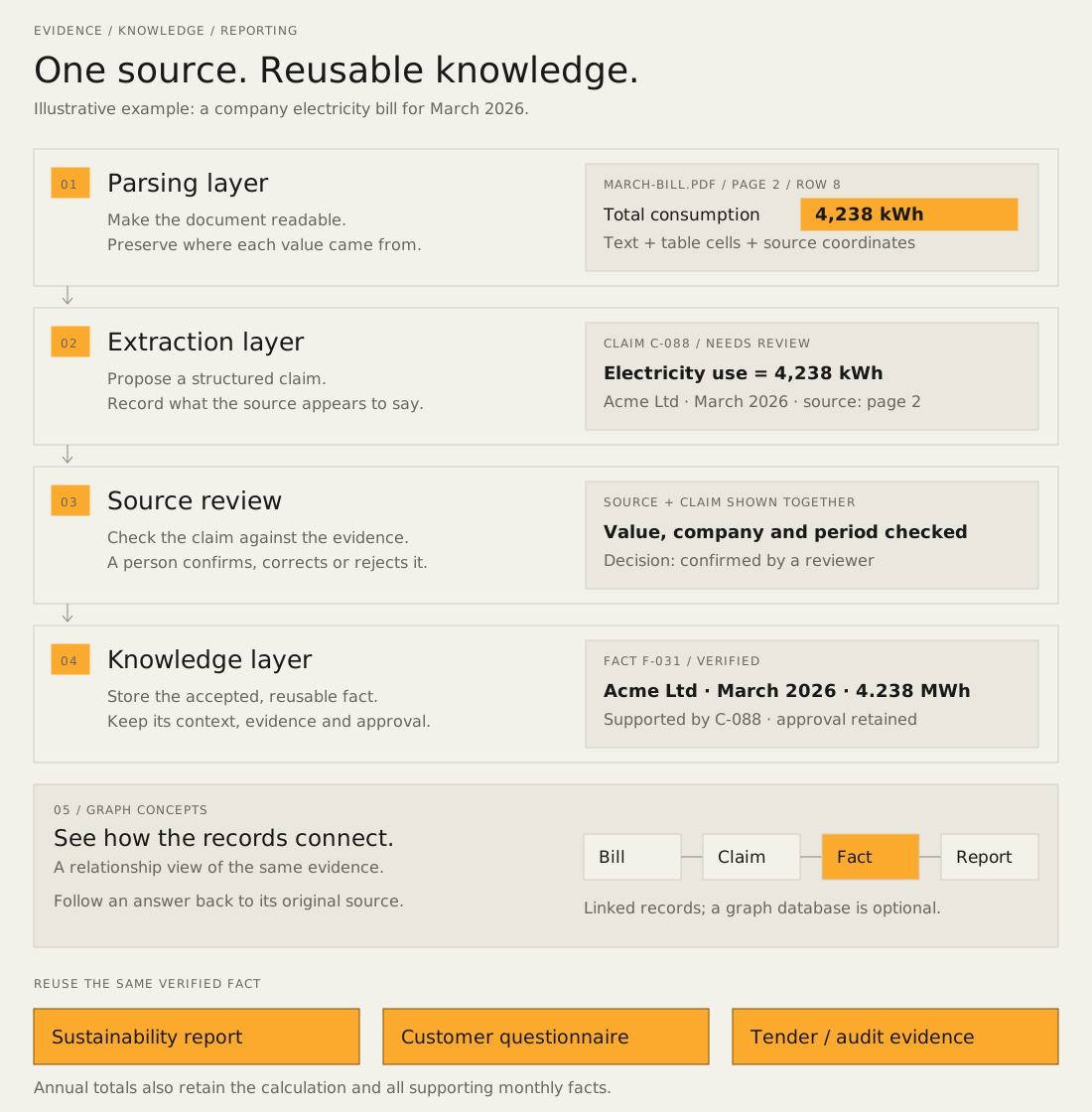
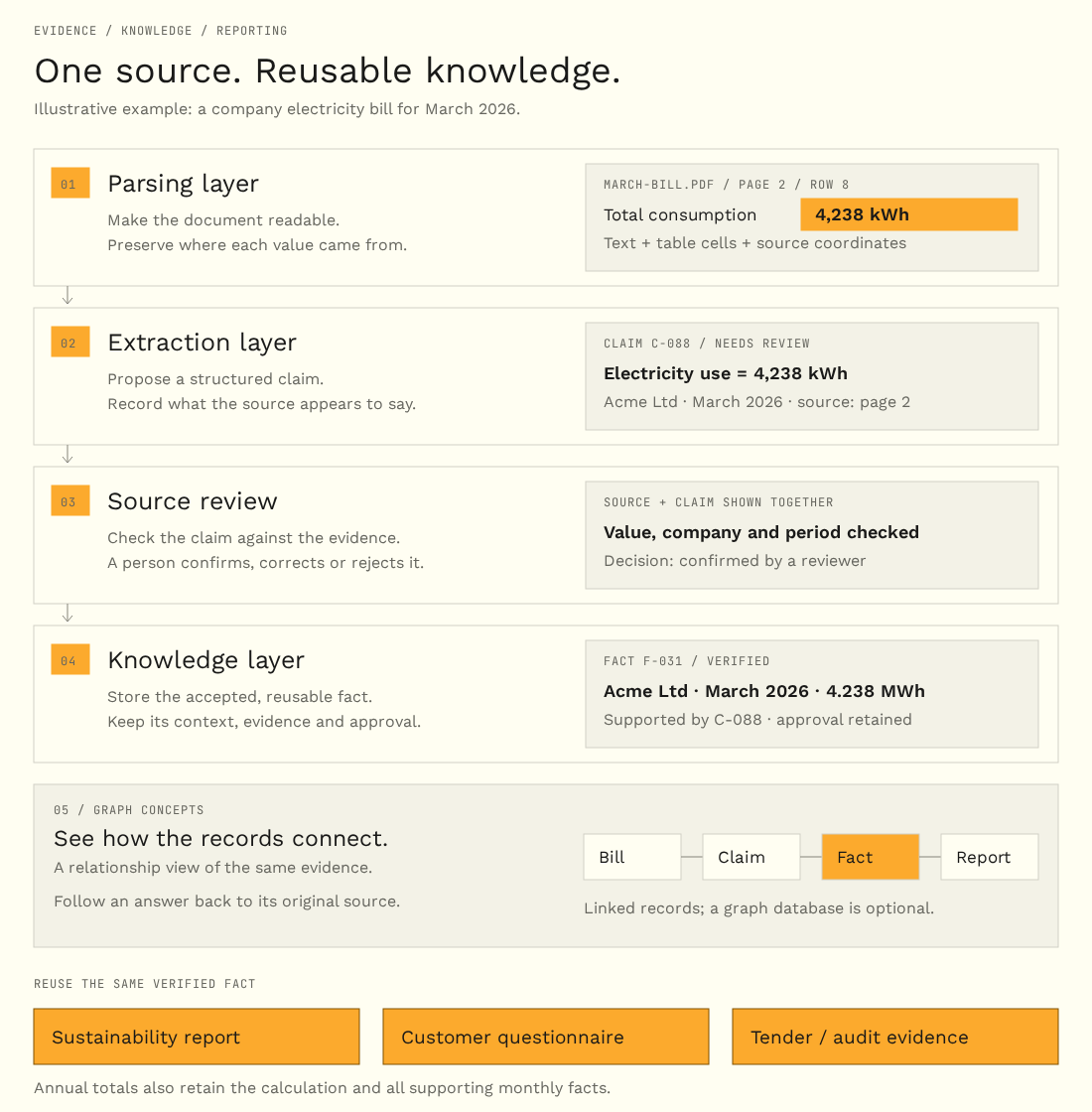
From documents to reusable knowledgeAn illustrative electricity bill moves through parsing, claim extraction, human source review and a verified knowledge layer. A relationship view links source, claim, fact and report. The same fact can support multiple outputs.EVIDENCE / KNOWLEDGE / REPORTINGOne source. Reusable knowledge.Illustrative example: a company electricity bill for March 2026.01Parsing layerMake the document readable.Preserve where each value came from.02Extraction layerPropose a structured claim.Record what the source appears to say.03Source reviewCheck the claim against the evidence.A person confirms, corrects or rejects it.04Knowledge layerStore the accepted, reusable fact.Keep its context, evidence and approval.MARCH-BILL.PDF / PAGE 2 / ROW 8Total consumption4,238 kWhText + table cells + source coordinatesCLAIM C-088 / NEEDS REVIEWElectricity use = 4,238 kWhAcme Ltd · March 2026 · source: page 2SOURCE + CLAIM SHOWN TOGETHERValue, company and period checkedDecision: confirmed by a reviewerFACT F-031 / VERIFIEDAcme Ltd · March 2026 · 4.238 MWhSupported by C-088 · approval retained05 / GRAPH CONCEPTSSee how the records connect.A relationship view of the same evidence.Follow an answer back to its original source.BillClaimFactReportLinked records; a graph database is optional.REUSE THE SAME VERIFIED FACTSustainability reportCustomer questionnaireTender / audit evidenceAnnual totals also retain the calculation and all supporting monthly facts.

Open full-size infographic ↗ · Download PNG ↗

Explore the evidence graph

Move the cards, zoom into the document, or trace a report back through its facts and sources.

Open full-screen canvas ↗

See the data behind the layers

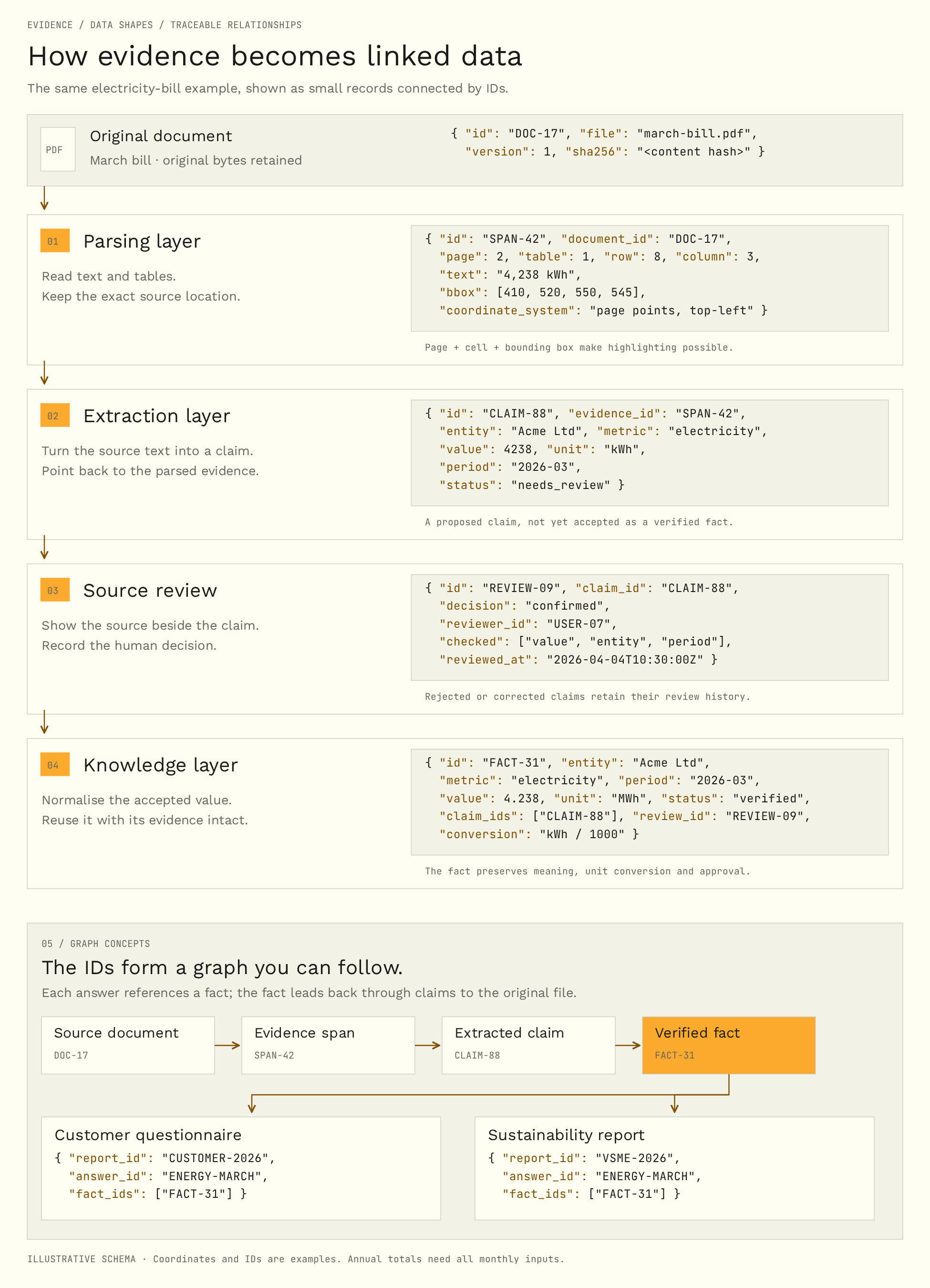
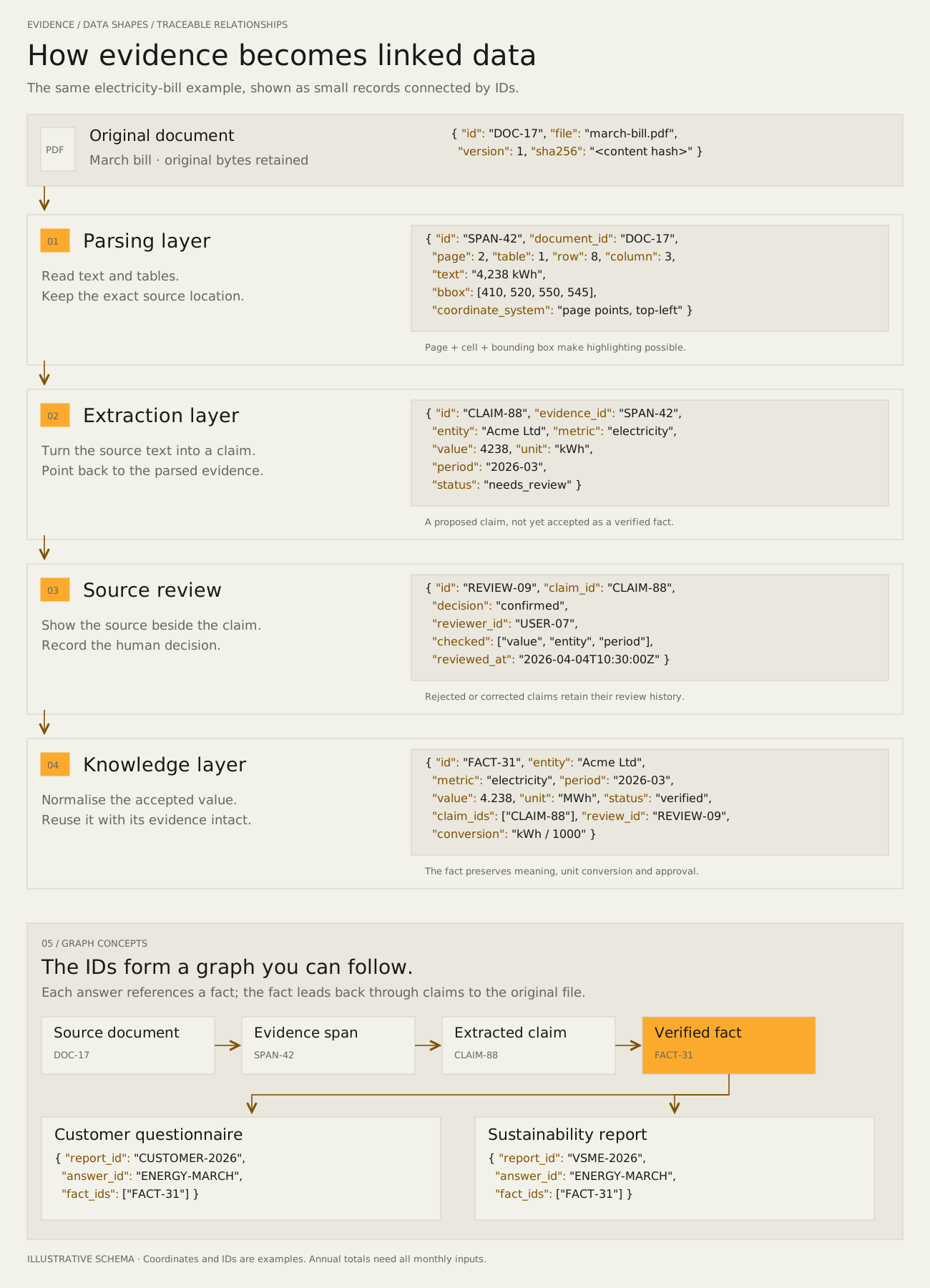
A second illustration follows the document through source coordinates, JSON claims, review decisions and reusable facts.

Open the linked-data infographic ↗ · Download PNG ↗

Five layers illustrated as linked JSON records, from a bill to multiple report answers

The distinction that matters

Claim: “This document appears to say this.”
Verified fact: “We have checked and accepted this value, for this company and period, with supporting evidence.”

Reports select the facts they need from this shared knowledge layer. Missing evidence prompts a specific request; conflicting claims remain visible for review. High AI confidence alone does not establish verification.

What makes it trustworthy

Keep exact source locations, document versions, extraction history and reviewer decisions. Preserve conflicting claims. Record calculation inputs. Freeze the facts and evidence used in each issued report so later changes cannot rewrite it.

DCB boundary: this describes the broader knowledge-layer concept. DCB has report-focused extraction and source traceability; the full reusable claims-and-facts engine is outside its prototype scope.